

The Most Comprehensive Guide on How Long a Title Deed Takes to Be Processed When Buying Land in Kenya.
PUBLISHED: FEBRUARY 10, 2025 UPDATED: FEBRUARY 10, 2025.
18 MINUTES READ TIME

WRITTEN BY:
Joshua Munuve, Digital Marketing Associate at Musyimi Damaris & Company Advocates.

REVIEWED, FACT-CHECKED & APPROVED BY:
Damaris Musyimi, Founder and Head Advocate at Musyimi Damaris & Company Advocates.
A Beginner’s Guide on How Long It Takes for the Title Deed to Be Ready When Buying Land in Kenya. (Proven)
Are you ready to invest in your dream property by buying land in Kenya but unsure about how long it will take to have your title deed ready? You may be wondering how long the title deed takes to be processed after buying land in Kenya. The time it takes to process the title deed can vary based on a few factors. They include:
- The type of property or land transaction.
- The location of the purchased land or property in Kenya.
- The efficiency of the Lands Registry in that area.
- Any complications or disputes related to the land purchase and ownership process.
In this guide, we break down the legal jargon as we cover everything you need to know about the time it takes for a land buyer in Kenya to obtain the title deed after buying land in Kenya.
Table of Contents:
Documents Required to Process and Transfer the Title Deed After Buying Land in Kenya.
When transferring a title deed in Kenya after buying land in Kenya, the following documents are required:
Land Buying Document Name | Sample Picture of Land Ownership Document |
|
|
|  |
|  |
|  |
|  |
|  |
| |
|

The other major documents are 2 copies of colored passport-size photos for both the land seller and the land buyer.
What Else Is Required to Get a Title Deed After Buying Land in Kenya?
When seeking to obtain a new title deed in Kenya when buying land in Kenya, the following additional requirements are essential:
- Stamp Duty: This is a tax imposed on the transfer of property, including land and real estate transactions. Previously, it was paid to the Kenya Revenue Authority (KRA). However, as of November 2023, this payment is now made to the Ministry of Lands under the State Department of Lands and Physical Planning.
- Property Lawyer Legal Fees: This fee covers the expertise of a property lawyer, which includes conducting due diligence on the property.
- Surveyor Fees: This fee is payable for land boundary verification conducted by a surveyor. An experienced property lawyer often has valuable connections with reliable surveyors and may even negotiate discounts on your behalf.
By addressing these key components, you can streamline the process of acquiring a title deed in Kenya.
Transfer of Land Ownership and Issuance of Title Deed to the Land Buyer.
The process of transferring land ownership and obtaining a title deed when buying land in Kenya usually involves several steps, as outlined below:
Land Buying Step | More information on land buying step |
| Once the sale agreement is signed and the deposit is paid, both the land buyer and seller can start preparing the necessary land ownership documentation, such as the national ID, KRA PIN, seller’s title deed, and more. |
| In this phase, the land buyer obtains a land rent clearance certificate from the Lands Registry. |
| The land seller applies for, pays for, and obtains this certificate from the Lands Registry where the land is located. |
| The property lawyer assisting in the transaction guides the land buyer and seller through this step. |
| The land seller must apply for and obtain consent from the National Land Commission. |
| This assessment is carried out by a government valuer to determine the size of the land and the corresponding stamp duty that needs to be paid. Experienced property lawyers often have established relationships with trusted private land valuers, which can help save you both time and money. |
| Payment of stamp duty is usually required before land can be transferred. This fee is paid to the State Department for Lands and Physical Planning. |
| After the payment of stamp duty, the sale agreement, title deed, and any other required documents (such as the transfer form) are submitted to the Land Registry for processing. The Land Registry will verify these documents and initiate the transfer of ownership. |
| The land ownership documents are submitted to the Land Registrar, who verifies the authenticity of the seller’s title deed, conducts any necessary checks, and updates the land records to reflect the new property ownership. If there are no disputes or encumbrances, the property transfer is processed, and a new title deed is prepared. |
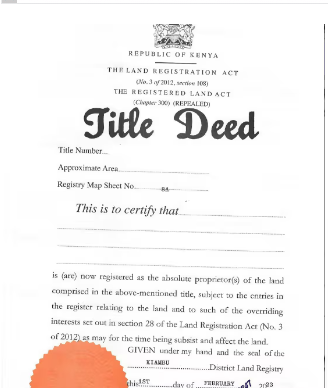
10. A new title deed is issued to the new land owner. | After the land transfer is complete, the Land Registry will issue a new title deed in the buyer’s name. The title deed will then be ready for collection, officially transferring ownership to the buyer. |
Next, we explore the overall time frame it takes for the title deed to be processed and ready and the factors that affect the speed.
The Overall Time Frame for the Title Deed to Be Ready After Buying Land in Kenya.
In an ideal situation, the entire process from signing the sale agreement to receiving the new title deed takes between 6 weeks to 90 days. However, if there are complications- such as disputes over land ownership, boundary issues, or delays in processing- the timeline can extend to several months or even longer. An experienced property lawyer in Kenya should provide advice on how to quicken the processing of land ownership documents based on their expertise.
Factors That Can Affect the Land Ownership Document Processing Timeline After Buying Land in Kenya.
- The efficiency of the Land Registries can vary significantly. In major cities like Nairobi, Mombasa, and Kisumu, land registries often handle a heavy workload, which can lead to delays in processing. In contrast, registries located in more rural areas may also experience delays due to limited resources and staffing. We have however found that there are proven ways of speeding up this process in both situations as we’ll cover shortly.
- Legal Challenges Related to the Purchased Land. If there are any unresolved issues such as encumbrances (like mortgages or unpaid land taxes), land disputes, or complications from inheritance, the process will be delayed. These problems must be addressed before the title deed can be issued.
- Mediation or Court Involvement. If the property is involved in legal disputes or the transaction includes public land (e.g. government land), the transfer process may be delayed until the dispute is resolved in court or through mediation.
- Surveyor’s Report. When boundaries are disputed or unclear, a surveyor may be needd to confirm the land’s boundaries, which can prolong the process.
4 Effective & Proven Tips You Can Use to Speed Up Your Title Deed Processing.
- Ensure You Make All Payments on Time:
This is crucial because one of the main reasons for delays in processing a new title deed after purchasing land is having pending payments at the Lands Registry. To avoid this, it is recommended you pay stamp duty, land rates, and any outstanding fees on time. According to regulations, a title deed cannot be issued until these payments are settled and payment receipts are submitted to the Lands Registry.
As a first-time land buyer, you can benefit from this by ensuring that you have all the necessary funds ready before starting your land purchasing process. We recommend planning for all required expenses right from the beginning.
2. Work with a Qualified Property Lawyer from the Onset:
Having an experienced property lawyer is very crucial for the success of your title deed expediting process. You should recognize that land is a limited resource and is subject to ongoing regulation by authorities.
As a result, various land laws and acts are regularly introduced and reviewed in national and county assemblies. These legal changes have a direct impact on how land is purchased and consequently how new title deeds are issued in different regions of the country.
Genuinely speaking, keeping track of land-buying laws can be quite impractical for buyers. This is where a qualified property lawyer comes in. They stay updated on regulations and their implications on land purchases, relieving you of that burden.
Once you identify the land you wish to buy, it is recommended you promptly contact your trusted property lawyer and inform them of your intentions. The property lawyer will then utilize their legal expertise to explain the legal side of the process for that specific property in that area.
Moreover, it is crucial to understand that one of the major things that could cause a delay in the processing of the title deed is incomplete or incorrect documentation. To get ahead of this, you should rely on your property lawyer to help you put all the necessary documentation in order based on the land laws of where the land is located.
As a first-time land buyer, we highly recommend hiring a property lawyer to avoid delays arising from incomplete or incorrect documentation.
3. Conduct Proper Due Diligence Before Committing to any payment or sale agreement:
This will be typically done by your property lawyer before you sign any binding sale agreements. Your trusted property lawyer represents you during the transaction. This due diligence process is crucial for identifying any potential red flags that need to be addressed before it’s too late. Red flags may include issues such as a caution against the sale of the land, a caveat restricting its sale, or ongoing legal disputes that prevent the production of the title deed until the matter is resolved. Some of these cases may involve succession and inheritance and could take a long time to be resolved.
As a first-time land buyer, you should not overlook this phase. If the findings of the due diligence reveal too many red flags with a specific piece of land, then avoid it and look for another option. As a first-time land buyer, you may now recognize the need for due diligence but you might not know what to look out for during this process. We understand this and are here to help you.
4. Follow Up with the Land Registry About their Title Deeds:
Once you have submitted all the necessary documents, the process of obtaining a title deed is managed entirely by the Land Registry. As a first-time land buyer, you must understand that many Land Registries have a heavy workload and are often labor-intensive. They frequently follow up with the relevant officials to expedite their title deed requests.
As a first-time land buyer, you may not be familiar with the officials at the Land Registry, but guess who does? Your property lawyer.
By hiring an experienced property lawyer, you benefit from their established business relationships. Regular follow-ups from your property lawyer ensure smooth communication.
By following these tips, you can be sure to speed up the processing of your title deed. We similarly appreciate that each person’s case is different and hence the need for personalized legal guidance. We got you covered.
Frequently Asked Questions About Title Deeds and Buying Land in Kenya.
The following are some of the most asked questions around title deeds and buying land in Kenya based on our experience working with multiple clients at Musyimi Damaris & Advocates Company.
- Create and Log into Your eCitizen Account.
- Go to the Ministry of Land Section.
- Choose the land search option.
- Enter the Title Deed Number in the Land Search.
- Make the Required Payment as prompted through Mpesa.
- Download and Print the Search Results.
The search results will let you know everything about that specific land.
If you feel uncertain about the process, it’s advisable to consult a property lawyer for assistance.
If you lose your title deed for any reason, the first step is to file a report with the police and obtain a stamped police abstract. After that, visit your local land office to notify them about the lost document.
The registrar will require proof of ownership which can be done by searching. You should bring a copy of your ID and your KRA PIN certificate and it is advisable to involve a property lawyer to ensure that the process is not only smooth but also legally compliant.
Certainly! In Kenya, a title deed can indeed feature multiple names, signifying that the land is co-owned by two or more individuals. This form of co-ownership presents an excellent opportunity for individuals to pool their resources together, facilitating joint investments in land acquisition. Navigating co-ownership requires careful attention to legal implications, as specific regulations may apply. Effective communication among co-owners is essential for harmonious relationships and decision-making. Awareness of potential challenges, such as disputes over land use or financial contributions, is also important. Thorough planning and clear agreements can help mitigate issues and foster a successful partnership in land ownership.
Yes, obtaining a loan using a title deed is indeed possible, but the feasibility largely depends on the specific type of loan you are seeking. Lenders typically assess the value of the property associated with the title deed, as well as your creditworthiness and financial situation.
Certain loan options, such as a home equity loan or a title loan, may allow you to borrow against the equity in your property. However, the terms, interest rates, and repayment conditions can vary significantly based on the lender and the nature of the loan. It’s essential to carefully evaluate different lending options and understand the implications before proceeding.
Consent-Based Removal of a Caution: If the individual who originally lodged the caution consents to its removal, they must submit a formal application to the Ministry of Lands. This process typically involves completing the necessary forms and providing any required documentation to confirm their decision. Once the application is reviewed and approved by the Land Registrar, the caution will be officially lifted, allowing the property owner more freedom in managing their property.
Court Application for Removal: In situations where there is a disagreement regarding the caution—whether it be among the property owner, the person who placed the caution, or other interested parties—those involved have the option to seek resolution through the court system. The aggrieved party may apply to the court to request the removal of the caveat. During this legal process, the court will examine the merits of the case and consider the evidence presented before making a decision. This can be a more lengthy and complex route, but it provides a means to resolve disputes that cannot be settled amicably.
In case the party that lodged the caution has completely refused to remove the caution, one can fill out the relevant forms with assistance from a qualified advocate to submit the same to the land registrar. Upon submission of the documents, the Land Registrar shall then summon the parties for a hearing as to why the caution should not be removed and decide after the hearing.
Before proceeding with a land purchase, the initial step is to identify the specific parcel of land you wish to acquire. This involves researching various locations and considering factors such as zoning regulations, accessibility, and future development plans that may influence your decision.
Once you have chosen the land that meets your requirements, it’s essential to conduct a thorough search regarding both the property and its current owner. This entails verifying that the name on the land title corresponds accurately with the individual or entity claiming to sell the property, ensuring there are no discrepancies or potential issues related to ownership.
To safeguard your interests throughout this process and to navigate the often complex legal framework associated with property transactions, it is highly advisable to enlist the expertise of a qualified property lawyer.
A property lawyer can assist you in reviewing contracts, conducting a title search, and addressing any legal concerns that may arise, ultimately providing you with peace of mind as you move forward with your land purchase.
Conclusion on Title Deed Being Ready After Buying Land in Kenya.
The journey to acquiring land ownership documents in Kenya, specifically the title deed, can vary significantly in duration, typically ranging from 6 weeks to 3 months. From our experience at Musyimi Damaris & Company Advocates Company. this timeframe is influenced by several factors, including the efficiency and workload of the Land Registry, the specific characteristics of the property in question, and any potential complicaions that may arise during the transaction.
At Musyimi Damaris & Advocates Company, we have helped multiple clients navigate this process smoothly and avoid unncessary delays. One of the things we have noted from the many Kenyans we have helped that helpd makes it smoother is ensuring that all required documentation is thoroughly completed and accurate.
Based on our 3 year plus legal experience, we recommend you engage the services of a reputable property lawyer, like us, from the moment you think of buying land in Kenya. An experienced property lawyer can help you identify opportunities within the process, potentially expediting the issuance of your title deed. Their expertise ensures that the entire experience is not only legal and correct but also as swift and seamless as possible, providing peace of mind as you transition into land ownership.
To read more of our informative blogs, including the process of foreigners to buy and own homes and land in Kenya & key factors to consider when buying land in Kenya to get the best possible property, click here. If you have any questions regarding buying land in Kenya, check out our Frequently Asked Questions. You can also send us a confidential message through our contact us form or directly call us at 0795470796 for an affordable legal review of your matter.
Supporting Sources
WRITTEN BY:
Joshua Munuve is a Digital Marketing Associate at Musyimi Damaris & Company Advocates. He has driven the growth of the law firm's online presence from getting no clients online to getting multiple and consistent clients a month to the point of online inquiries and consequent clients being more than walk-in inquiries and consequent clients. This has been achieved through his web development skills.
REVIEWED, FACT-CHECKED & APPROVED BY:
Damaris Musyimi is the Founder and Head Advocate at Musyimi Damaris & Company Advocates. With over three years of experience in legal practice, she has assisted numerous Kenyans in recovering more than 100 hectares of land. Additionally, she has guided many individuals in purchasing property and has supported families with succession and inheritance matters. Several legal organizations she previously collaborated with continue to consult her on various legal issues.

The Best Time to Pay Deposit When Buying... February 10, 2025
Factors to Consider When Buying Land in Kenya... February 10, 2025
